Why Strength Training Changed My Life — And How It Can Help You Too
Strength training used to scare me — I thought it was only for bodybuilders or gym extremists. But after years of feeling weak and low on energy, I gave it a real shot. What I discovered surprised me: lifting weights isn’t just about muscles. It boosts confidence, sharpens focus, and transforms how you move through life. This isn’t about looking ripped — it’s about feeling strong, capable, and in control. Let’s break down the real benefits, bust the myths, and make strength training something *you* can start today — no gym required.
The Hidden Crisis: Why So Many of Us Are Weaker Than We Think
Most people don’t realize how quickly strength declines when it’s not actively maintained. In today’s world, physical effort has been engineered out of daily life. Jobs that once required movement now demand only mouse clicks. Commutes are shorter or nonexistent, and household chores have been simplified by technology. The average adult spends more than eight hours a day sitting — a habit that quietly undermines muscle integrity. This isn’t just about comfort; it’s about long-term health.
One of the most under-discussed health issues is **sarcopenia**, the progressive loss of muscle mass and strength associated with aging. What many don’t know is that this process begins as early as the mid-30s. After age 30, adults lose between 3% and 5% of their muscle mass each decade. Without intervention, this decline accelerates after 60, leading to reduced mobility, increased fall risk, and loss of independence. But sarcopenia isn’t an inevitable sentence — it’s a condition that can be slowed, even reversed, with the right kind of physical activity.
Weak muscles affect far more than just lifting ability. They compromise posture, making back pain more common. They reduce balance, increasing the likelihood of injuries from simple missteps. Even breathing and digestion can be impacted, as core strength supports vital functions. When muscles weaken, energy levels drop because the body has to work harder to perform basic tasks. The result is a cycle: less strength leads to less movement, which leads to even less strength. The good news is that this cycle can be broken — not with extreme measures, but with consistent, manageable resistance training.
Beyond Bulking: What Strength Training Really Is (And What It Isn’t)
For many, the term “strength training” conjures images of bulky physiques, grunting in a crowded gym, or complex equipment only experts can use. These misconceptions keep people — especially women — from trying it. But strength training is not about becoming a bodybuilder. It’s about building functional strength — the kind that helps you carry groceries, play with your kids or grandkids, or get up from a chair without using your arms. It’s about resilience, not appearance.
At its core, strength training is any activity that makes your muscles work against resistance. This resistance can come from your own body weight, elastic bands, dumbbells, kettlebells, or gym machines. The key principle is **progressive overload** — gradually increasing the demand on your muscles so they adapt and grow stronger. This doesn’t mean lifting heavy weights right away. It means starting where you are and making small, sustainable increases over time.
There are many accessible ways to begin. Bodyweight exercises like squats, lunges, and modified push-ups require no equipment and can be done at home. Resistance bands are inexpensive, portable, and offer varying levels of tension. Free weights allow for a wide range of motion and help improve coordination. Each method has its strengths, and the best choice depends on your goals, space, and comfort level. The goal isn’t perfection — it’s consistency and progression.
Strength training also supports more than just muscles. It strengthens tendons and ligaments, improving joint stability. It increases bone density, which is especially important for women at risk of osteoporosis. It boosts metabolism, because muscle tissue burns more calories at rest than fat does. And it enhances posture and balance, reducing the risk of falls as you age. These benefits aren’t limited to athletes or the young — they’re available to anyone willing to start, regardless of fitness level.
The Science-Backed Perks: Why Your Body Craves Resistance
The benefits of strength training are not just anecdotal — they are supported by decades of scientific research. One of the most significant findings is its impact on metabolic health. Studies show that regular resistance training improves insulin sensitivity, helping the body manage blood sugar more effectively. This is crucial in preventing type 2 diabetes, a condition that affects millions worldwide. Muscle acts as a glucose reservoir, absorbing sugar from the bloodstream during and after exercise, which helps stabilize energy levels and reduce insulin resistance.
Another major benefit is the increase in **resting metabolic rate** (RMR). Because muscle is metabolically active tissue, the more you have, the more calories your body burns even when you’re not moving. This means that two people of the same weight can have very different metabolic rates based on their muscle mass. Strength training shifts the body’s composition in favor of lean mass, making weight management easier over time. Unlike cardio, which burns calories only during the activity, strength training creates a longer-lasting metabolic effect.
Heart health also improves with strength training. Research published in journals like *Medicine & Science in Sports & Exercise* shows that resistance training can lower blood pressure, improve cholesterol profiles, and enhance circulation. These changes reduce the risk of cardiovascular disease, the leading cause of death globally. The American Heart Association now includes strength training as part of its recommended weekly physical activity guidelines, alongside aerobic exercise.
Mental health benefits are equally compelling. Multiple studies have found that strength training reduces symptoms of anxiety and depression. It boosts endorphins and other neurochemicals that improve mood and cognitive function. People who strength train regularly report better sleep, increased energy, and greater feelings of self-efficacy — the belief that they can handle challenges. This psychological shift is powerful. It changes how people view themselves, not as fragile or limited, but as capable and strong. Over time, this confidence extends beyond the gym into daily life.
Starting Small: How to Begin Without Overwhelm
One of the biggest reasons people fail to stick with strength training is starting too aggressively. They push too hard, too fast, and end up sore, discouraged, or injured. The key to long-term success is not intensity — it’s **consistency**. You don’t need to train for an hour every day to see results. In fact, just two short sessions per week can make a meaningful difference, especially when done regularly over time.
A simple way to begin is with bodyweight exercises. These require no equipment and can be done in a small space. A beginner routine might include: bodyweight squats (to build leg strength), wall push-ups or knee push-ups (for upper body), planks (for core stability), and glute bridges (to strengthen the hips and lower back). Each exercise can be performed for 2–3 sets of 8–12 repetitions, with a focus on form rather than speed or number of reps.
Proper form is essential to prevent injury and maximize results. For squats, keep your chest up, back straight, and knees aligned with your toes. For planks, engage your core and avoid letting your hips sag. If you’re unsure, watching reputable instructional videos or consulting a certified trainer can help. The goal is to move with control and awareness, not to rush through the motions.
It’s also important to understand the difference between soreness and pain. Delayed onset muscle soreness (DOMS) is normal — it usually peaks 24 to 48 hours after a new or intense workout and fades within a few days. But sharp, persistent pain is a warning sign. Rest is not a sign of failure — it’s a necessary part of the process. Muscles grow and repair during recovery, not during the workout itself. Allowing at least one rest day between strength sessions gives your body time to adapt and strengthen.
Making It Stick: Building a Routine That Fits Real Life
For many women, especially those managing households, careers, and family responsibilities, finding time to exercise can feel impossible. The good news is that strength training doesn’t require hours at the gym. A 20-minute session at home can be just as effective as a longer workout if done with focus and consistency. The challenge isn’t time — it’s integration. The solution is to make strength training a natural part of your existing routine.
One effective strategy is **habit stacking** — linking a new behavior to an existing one. For example, you might do a set of squats and planks right after making your morning coffee. Or perform a few resistance band exercises while watching the evening news. These small moments add up. Over time, they become automatic, like brushing your teeth or locking the door at night.
Another approach is to plan workouts around natural breaks in the day. A midday session can boost energy and focus, especially if you’ve been sitting for hours. A short evening routine can help you unwind and improve sleep quality. If you prefer structure, scheduling workouts on your calendar — just like a doctor’s appointment — increases the likelihood of follow-through.
Progress doesn’t have to be measured by the scale. In fact, the scale can be misleading, since muscle weighs more than fat. Better indicators include how your clothes fit, how easily you climb stairs, how much less you struggle with daily tasks, and how much more energy you have. These are real, meaningful signs of strength. Celebrating these small wins helps maintain motivation and reinforces the value of the effort.
Fuel and Recovery: What Supports Strength Gains
While exercise stimulates muscle growth, it’s during rest and recovery that the real transformation happens. Without proper recovery, even the best workout routine can lead to fatigue, injury, or burnout. Recovery isn’t passive — it’s an active part of training that includes sleep, nutrition, hydration, and listening to your body.
Sleep is one of the most powerful recovery tools. During deep sleep, the body releases growth hormone, which repairs muscle tissue and supports adaptation. Adults should aim for 7–9 hours of quality sleep per night. Poor sleep not only slows recovery but also increases cortisol, a stress hormone that can break down muscle and promote fat storage.
Nutrition plays a critical role as well. Protein is essential for muscle repair, but it doesn’t require extreme diets or expensive supplements. Most adults need about 0.8 to 1.2 grams of protein per kilogram of body weight per day, spread throughout meals. Good sources include lean meats, fish, eggs, dairy, legumes, and plant-based proteins like tofu and lentils. **Protein timing** matters — consuming some protein within a few hours after a workout supports recovery. But overall daily intake is more important than precise timing.
Hydration is often overlooked. Water is involved in every metabolic process, including muscle contraction and recovery. Even mild dehydration can reduce strength and endurance. Aim for consistent fluid intake throughout the day, especially on workout days. Listening to your body’s signals — thirst, energy levels, mood — can guide your needs.
Overtraining is a real risk, especially when enthusiasm outpaces recovery. Signs include persistent fatigue, irritability, trouble sleeping, and declining performance. If these occur, it’s time to scale back, rest, and reassess. Training smarter, not harder, is the key to sustainable progress.
Strength for Life: Why This Isn’t a Phase, It’s a Lifestyle
Strength training is not a short-term fix or a trend. It’s a lifelong investment in your health, mobility, and independence. The choices you make today — to move, to challenge your body, to care for your recovery — shape how you’ll feel in 10, 20, or 30 years. The goal isn’t to look like a fitness model — it’s to live fully, with energy, confidence, and resilience.
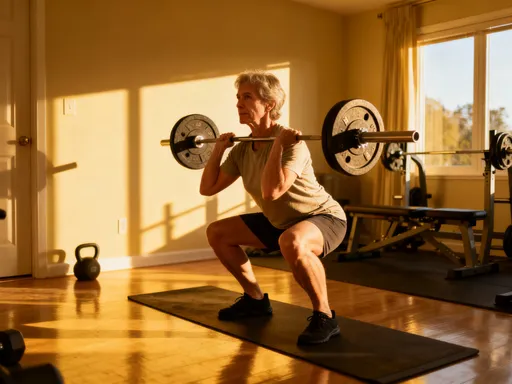
Consider the stories of women in their 50s, 60s, and beyond who started strength training later in life. Many began with doubts — “I’m too old,” “I’ll never get strong.” But within months, they noticed changes: less back pain, easier movement, more stamina. Some regained the ability to play with grandchildren, garden without discomfort, or travel without fear of falling. These aren’t miracles — they’re the natural results of consistent effort.
Strength is not about youth. It’s about **resilience at every age**. It’s about knowing you can get up from the floor if you fall. It’s about carrying your suitcase through the airport. It’s about living without fear of frailty. And it’s never too late to start. Research shows that even people in their 90s can gain muscle and strength with proper training.
The journey begins not with perfection, but with a single step — or a single rep. You don’t need a gym membership, expensive gear, or hours of free time. You need only the willingness to try, to show up, and to keep going. Strength training isn’t about becoming someone else. It’s about becoming more of who you already are — capable, strong, and in control. And that’s a promise worth keeping.