Through the Lens of the Wild: Chasing Light in Temburong’s Untamed Heart
You know what? I never expected Brunei to blow my mind like this. Hidden in the jungle-covered corners of Temburong, nature doesn’t just exist—it breathes. As a photographer, stepping into this green haven felt like entering a living studio lit by golden canopy rays and misty dawn. Every frame told a story. The air hummed with unseen life, the trees whispered ancient rhythms, and light danced through leaves like scattered stardust. This is not just travel. This is raw, untouched beauty waiting to be seen—quiet, profound, and achingly real. In a world where so much feels staged or lost to development, Temburong stands as a rare sanctuary where wilderness still rules.
Discovering Temburong: A Hidden Gem in Southeast Asia
Temburong, often referred to as the 'jewel in the crown' of Brunei, lies separated from the country’s main territory by a stretch of Malaysian land. Nestled in the southeastern corner of Borneo, this secluded district remains one of the least developed and most ecologically intact regions in Southeast Asia. Unlike the bustling cities and oil-driven economy of Brunei’s western regions, Temburong offers a striking contrast—vast tracts of primary rainforest, winding rivers, and a pace of life deeply intertwined with nature. Its isolation, once a geographical challenge, has become its greatest strength, shielding it from mass tourism and industrial expansion.
Access to Temburong requires intention. Visitors typically travel by boat from Bandar Seri Begawan across the Brunei Bay, followed by a scenic drive through lush hills and small villages. Some may opt for a combination of ferry and land transfer via Limbang, Malaysia, though proper documentation is required. This deliberate journey enhances the sense of arrival—an entry not into a theme park or resort zone, but into a place that asks you to slow down, observe, and respect. There are no highways slicing through the forest, no towering hotels on the horizon. What exists are eco-lodges, community-run guides, and trails that follow the natural contours of the land.
The district spans over 1,300 square kilometers, with more than 70% covered in pristine rainforest. It forms part of the Heart of Borneo initiative—a transboundary conservation effort between Brunei, Indonesia, and Malaysia aimed at preserving one of the world’s most biodiverse ecosystems. In Temburong, biodiversity isn’t just a statistic; it’s visible in every layer of the forest. From the forest floor teeming with insects and fungi to the emergent trees rising over 60 meters high, life thrives in complex harmony. For travelers seeking authenticity, this region offers a rare opportunity to witness nature functioning as it has for millennia.
Why Temburong Appeals to Nature Photographers
For nature photographers, Temburong is a dream realized. It presents a landscape where light, texture, and movement converge in ways that few places on Earth can match. The dense primary rainforest creates a dynamic interplay of shadows and illumination, especially during the early hours when mist rises from the valley floors and sunlight filters through the canopy in soft, diffused beams. These conditions are ideal for capturing depth, contrast, and atmosphere—elements that elevate a simple photograph into a visual narrative.
The region's rich biodiversity provides endless subjects. Birdwatchers and photographers may catch glimpses of the rhinoceros hornbill, with its striking casque and deep wingbeats, or the lesser known but equally captivating blue-winged pitta. Reptiles like the reticulated python and various tree frogs offer compelling macro opportunities, their colors and patterns enhanced by dew-covered leaves. Even the flora tells stories—carnivorous pitcher plants nestled among mossy roots, towering dipterocarps draped in lianas, and orchids blooming in hidden clearings.
What sets Temburong apart is the absence of visual clutter. There are no power lines, no billboards, no signs of human intrusion beyond carefully designed wooden boardwalks and observation decks. This purity allows photographers to compose images that feel timeless, unspoiled by modernity. Whether shooting wide-angle panoramas of misty valleys or tight close-ups of a spiderweb glistening with morning dew, the environment supports both technical precision and artistic expression. The silence, too, plays a role—without constant noise, one becomes more attuned to subtle movements, making it easier to anticipate the perfect moment to press the shutter.
Key Natural Sites for Capturing Stunning Imagery
Ulu Temburong National Park stands as the centerpiece of any photographic expedition in the region. Established in 1991 and often called the 'Green Jewel of Brunei,' the park protects over 50,000 hectares of protected rainforest. Entry is regulated to ensure minimal impact, with visitors required to go through a briefing and travel with certified local guides. The journey into the park itself is part of the experience—reaching the trailhead by longboat along the Temburong River, surrounded by towering mangroves and the occasional monitor lizard basking on the banks.
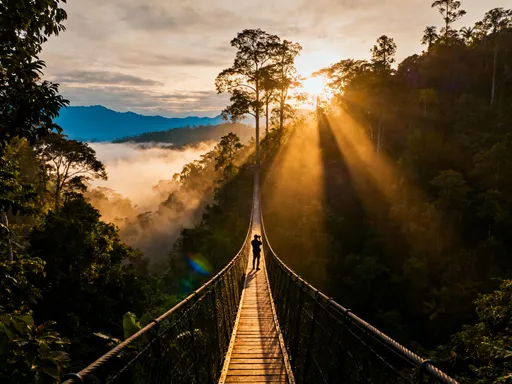
One of the most iconic experiences within the park is the canopy walkway system. Suspended over 30 meters above the forest floor, these steel and wooden bridges offer unparalleled perspectives. At dawn, when fog lingers beneath the treetops, the walkway becomes a stage for ethereal long-exposure photography. Shooting downward through the mist, one can capture the illusion of floating islands of green, disconnected from the earth below. Wide-angle lenses excel here, emphasizing scale and depth, while telephoto shots can isolate individual crowns bathed in morning light.
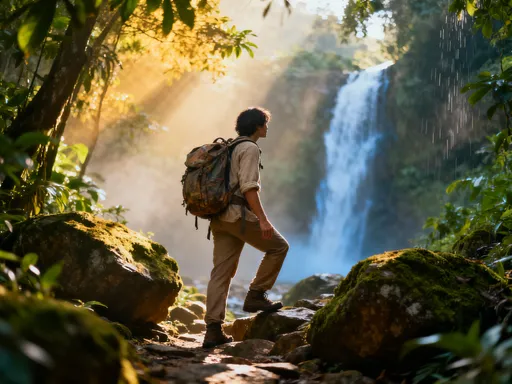
Waterfalls such as Sungai Mau and Batu Buris provide additional focal points. Sungai Mau, accessible via a moderate jungle trek, cascades down moss-covered rocks into crystal-clear pools. The surrounding vegetation creates natural frames, and the constant mist supports a micro-ecosystem of mosses, ferns, and amphibians. Early morning visits allow photographers to capture the falls with soft, even lighting before the sun pierces the canopy. Using slow shutter speeds, the water transforms into silky ribbons, contrasting beautifully with the sharp textures of wet stone and bark.
River trails along the Temburong and Menunggul rivers also offer quiet moments ideal for reflection and observation. Canoe or kayak excursions enable silent approach to riverbanks where kingfishers dive or proboscis monkeys leap between branches. These quiet vessels minimize disturbance, allowing for intimate wildlife encounters without intrusion. Photographers who rise before sunrise will find the rivers cloaked in golden haze, perfect for silhouettes and atmospheric compositions.
Best Times and Conditions for Optimal Shots
Timing is everything in nature photography, and Temburong rewards those who plan wisely. The golden hours—shortly after sunrise and just before sunset—deliver the most magical lighting conditions. During these windows, the low angle of the sun creates long shadows, highlights textures in bark and foliage, and produces the famed 'god rays' that stream through gaps in the canopy. These beams, especially visible in the early morning when humidity is high, add drama and dimension to images.
Weather patterns significantly influence photographic opportunities. Temburong experiences a tropical rainforest climate with high humidity and regular rainfall throughout the year. While some may shy away from the wet season (typically November to February), it offers unique advantages. The landscape becomes intensely green, waterfalls swell, and the air carries a freshness that enhances clarity after rain. Light diffuses beautifully through cloud cover, reducing harsh contrasts and enabling more balanced exposures. However, photographers must be prepared for sudden downpours and slippery trails, necessitating protective gear for both equipment and person.
The period from March to October generally offers more stable weather, with fewer prolonged rains and increased chances of clear mornings. This window is ideal for those planning multi-day expeditions or aiming to capture consistent lighting across several locations. Even during drier months, mist often forms in the valleys overnight, burning off by mid-morning—making early starts essential for capturing that dreamlike atmosphere.
Seasonal wildlife activity also affects timing. Birdsong peaks at dawn, and many mammals are most active during the cooler parts of the day. Nesting seasons for certain birds, such as hornbills, occur between February and June, providing rare opportunities to photograph courtship behaviors and fledglings. Reptiles and amphibians become more visible after rainfall, when they emerge to hunt or cool off. Understanding these cycles allows photographers to align their visits with moments of heightened natural activity.
Practical Tips for Photographers on the Ground
Success in Temburong depends not only on skill but on preparation. The environment is humid, unpredictable, and physically demanding. Carrying the right gear can make the difference between capturing a once-in-a-lifetime shot and returning with damaged equipment. A waterproof backpack or rain cover is essential, as sudden showers are common. Equipment should be stored in sealed, moisture-resistant cases when not in use, and silica gel packs can help reduce internal condensation.
A sturdy tripod is invaluable, particularly for low-light conditions under the dense canopy or for long-exposure waterfall shots. Carbon fiber models are recommended for their strength and light weight, easing the burden during hikes. A polarizing filter helps manage reflections on wet surfaces and enhances color saturation in foliage and skies. For macro photography, a dedicated close-up lens or extension tubes allow detailed capture of insects, flowers, and textures without disturbing the subject.
Wearing neutral-colored clothing—such as khaki, olive, or gray—helps blend into the surroundings and minimizes disturbance to wildlife. Bright colors or strong scents can alert animals and disrupt natural behavior, reducing opportunities for candid shots. Staying quiet and moving slowly increases the chances of close encounters. Many animals are sensitive to movement and sound; patience often yields the best results.
Engaging local guides is not just advisable—it’s required within Ulu Temburong National Park. These guides possess intimate knowledge of animal behavior, trail conditions, and optimal vantage points. They can lead photographers to hidden spots known only to residents, such as a quiet bend in the river where birds regularly bathe or a secluded grove where orangutans have been sighted. Their presence ensures safety, compliance with regulations, and deeper cultural connection. Supporting local ecotourism also contributes directly to conservation efforts and community livelihoods.
Respecting Nature While Capturing Its Beauty
With great access comes great responsibility. Temburong’s fragile ecosystem depends on mindful interaction. Ethical photography means prioritizing the well-being of the environment over the perfect shot. This includes maintaining a safe distance from wildlife, avoiding flash in sensitive habitats (especially at night), and never baiting or luring animals. Flash can disorient nocturnal creatures and disrupt natural behaviors; in some cases, it may even harm species with light-sensitive eyes.
Staying on marked trails prevents soil erosion and protects delicate undergrowth. Trampling through the forest floor can destroy microhabitats and introduce invasive species via seeds stuck to shoes or gear. Littering is strictly prohibited—there are no waste disposal systems in remote areas, so all trash must be carried out. This 'leave no trace' principle ensures that future visitors experience the same untouched beauty.
Photographers are encouraged to adopt a slow, contemplative approach. Instead of rushing from one location to the next, spending extended time in a single spot often reveals more intimate moments—a spider rebuilding its web, a mother bird feeding her young, or sunlight gradually shifting across a tree trunk. These quiet observations lead to more meaningful images, rooted in presence rather than pursuit.
Respect also extends to local customs and protected areas. Some sites may hold cultural significance for indigenous communities, and access may be restricted during certain times of the year. Following guidelines set by park authorities and listening to local guides ensures that tourism remains sustainable and respectful. Photography should celebrate, not exploit, the natural world.
The Deeper Impact of Visual Storytelling in Conservation
A photograph from Temburong is more than a personal keepsake—it’s a voice for the voiceless. Powerful imagery has the ability to transcend language, evoke emotion, and inspire action. When shared widely, images of misty canopies, rare birds, and pristine rivers can raise global awareness about the importance of rainforest preservation. In an era where deforestation continues at alarming rates across Borneo, places like Temburong serve as living proof that conservation works when prioritized.
Visual storytelling connects distant audiences to ecosystems they may never visit. A single image of a hornbill in flight or a frog perched on a leaf can spark curiosity, educate viewers, and mobilize support for environmental causes. Social media, exhibitions, and publications become platforms for advocacy, turning photographers into unintentional ambassadors for nature. When people see the beauty of Temburong, they are more likely to care about its survival.
This responsibility should not be taken lightly. Authentic representation matters—avoiding staged scenes or misleading edits preserves the integrity of the message. The goal is not to dramatize, but to reveal. Every honest photograph contributes to a larger narrative: that wild places are worth protecting, not because they are useful, but because they exist.
Exploring Temburong through the lens is not just about technical mastery or chasing accolades. It’s about bearing witness. It’s about slowing down, opening your eyes, and recognizing that beauty thrives in stillness and silence. For the women and men who carry cameras into these forests—many of them midlife travelers seeking meaning, connection, and renewal—this experience offers something deeper than great shots. It offers transformation.
So go. Explore responsibly. Capture authentically. Share widely. Because some wild places, like Temburong, deserve not just our attention, but our enduring commitment. Let your images remind the world that wonder still exists—if we choose to protect it.